
What if the secret to a braid style that looks fresh for two months isn't the hair you added, but how you treat the hair you already have? We've all felt that frustrating itch by day six, or the sight of flyaways threatening to turn your sleek look into a fuzzy mess while you try to maintain braids for natural hair. You want a protective style that actually protects, not one that leaves you worried about breakage or thinning edges when it's time for removal.
You can achieve a perfect balance of aesthetic precision and hair health. This guide reveals the professional secrets to keeping your style seamless and your scalp clean for up to eight weeks. We focus on the moisture-tension balance of your natural strands, moving beyond basic care into a more meticulous, artisan approach to hair longevity that respects the heritage of your texture.
We'll walk you through the modern "skinification" of scalp care, the essential nighttime rituals to combat frizz, and the specific hydrating techniques required to foster growth. From soothing botanical sprays to the art of the silk wrap, you're about to transform your maintenance routine into a ritual of care and personal confidence.
Key Takeaways
- Learn the essential 6-8 week rule for protective styling to ensure your natural strands remain strong and free from tension-induced breakage.
- Master a sophisticated nighttime routine using silk or satin to maintain braids for natural hair while preventing root friction and unwanted frizz.
- Discover the "focus on the roots" cleansing philosophy to eliminate itchiness and buildup while preserving the meticulous neatness of your style.
- Distinguish between heavy grease and lightweight hydration to keep your scalp nourished and your edges protected throughout the life of your braids.
- Identify the precise signs that it is time for a professional takedown to transition seamlessly into your next healthy hair chapter.
Understanding the Foundation of Braid Longevity
Longevity is more than just a duration; it's a commitment to the health of your scalp and the integrity of your natural strands. To truly maintain braids for natural hair, you must view the style as a partnership between your texture and the artisan's skill. This foundation rests on a delicate balance. You want to preserve the meticulous neatness of the look without compromising the moisture levels of the hair underneath. A successful style is one that leaves your hair in better condition than when you started.
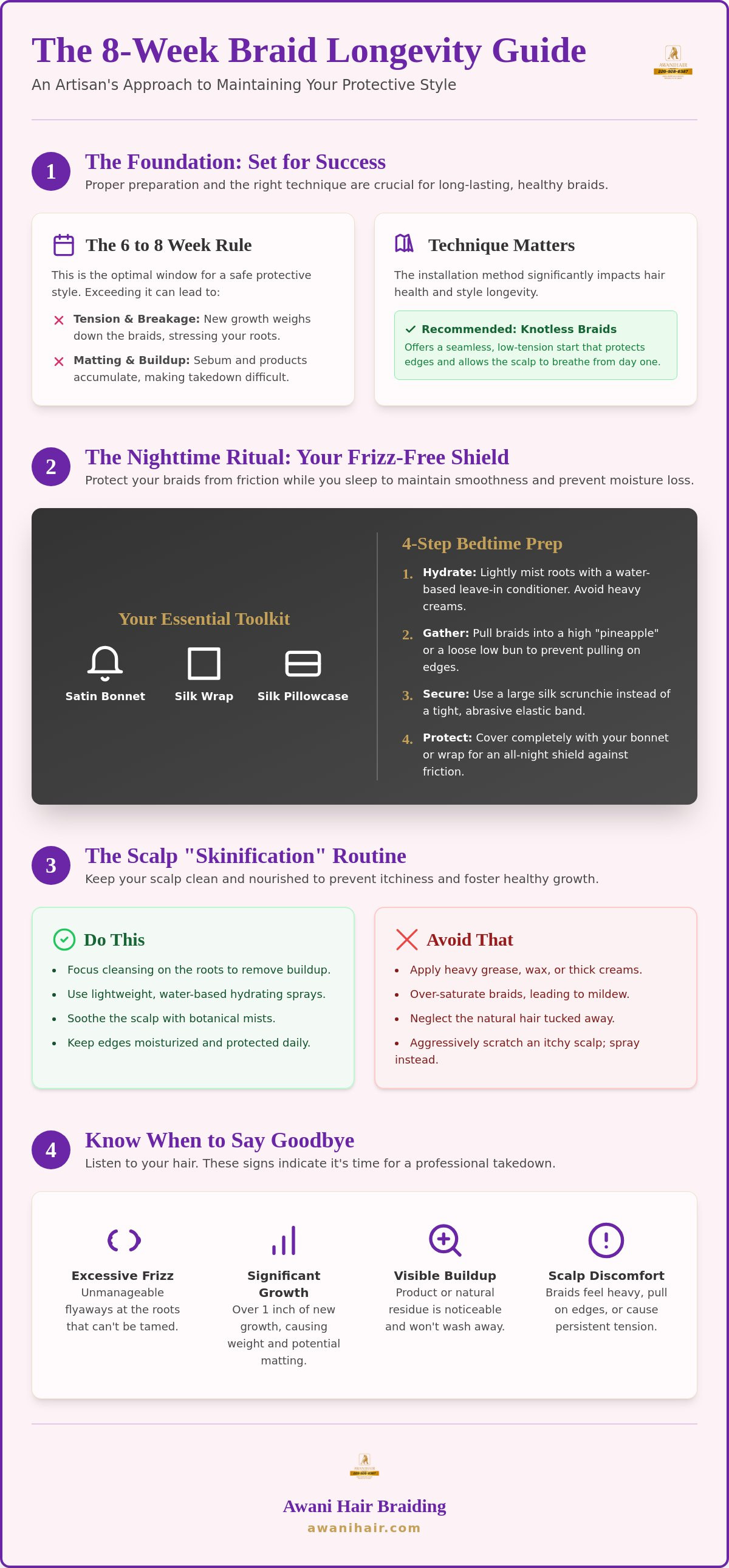
In 2026, the standard for a safe protective hairstyle remains the six to eight week window. Pushing past this threshold often leads to unnecessary tension as new growth begins to weigh down the braids. This is where the choice of technique becomes vital. Choosing knotless vs traditional box braids can significantly impact your hair's health. Knotless styles offer a seamless, low-tension start that protects your edges and makes daily maintenance feel effortless. They allow the scalp to breathe from day one, setting the stage for long-term comfort.
Why Natural Hair Needs a Maintenance Plan
Your hair doesn't stop needing care just because it's tucked away. Natural strands are prone to matting at the root, specifically where your own hair meets the extension. Without a plan, sebum and product residue can accumulate, creating a stubborn buildup that makes removal difficult. A methodical routine ensures that your hair continues to grow and thrive. Proper hydration during this phase isn't optional; it's the secret to keeping your hair soft and resilient. By addressing the scalp's needs early, you prevent the common "itchy phase" and keep your natural hair protected for weeks.
Setting Realistic Expectations for Your Style
Every head of hair tells a different story. Small, intricate braids often last longer than jumbo styles because they distribute weight more evenly across the scalp. Your specific hair texture also dictates how quickly frizz might appear. High-porosity hair may require more frequent sealing to keep flyaways at bay. The precision of a professional, appointment-only installation is your best defense against early degradation. When a style is installed with meticulous care, your daily workload to maintain braids for natural hair decreases. You gain the freedom to enjoy your look with total confidence and ease.
Mastering the Nighttime Routine for Frizz-Free Braids
Nighttime is the most critical period for style preservation. Without a thoughtful routine, the friction from your pillowcase can undo days of careful care in a single night. To maintain braids for natural hair effectively, you must create a barrier between your delicate strands and abrasive fabrics. Cotton is a thief. It absorbs the essential oils your scalp produces and tugs at the cuticle, leading to the dreaded "halo" of frizz. Transitioning to silk or satin isn't just a luxury; it's a fundamental requirement for anyone serious about their hair's longevity. The goal is to keep the cuticle smooth and the scalp hydrated. Every movement against a standard cotton sheet acts like a micro-abrasion on your hair fibers, eventually leading to thinning and a loss of style definition.
Essential Nighttime Tools
Success begins with the right equipment. An extra-large satin bonnet is often the best choice for those with significant length or volume. It allows the braids to rest without being crushed or bent. For those wearing box braids for natural hair Brooklyn, indoor air quality and humidity can be silent factors that affect hair health. A light braid sheen or a silk-based edge wrap keeps the perimeter laid and tension-free. High-quality satin wraps act as a shield, preserving the sensory beauty and neatness of your hair. Always keep a silk pillowcase on your bed as a secondary fail-safe. If your bonnet slips off during the night, your hair remains protected against moisture loss and mechanical stress.
Step-by-Step Bedtime Prep
Your preparation should be methodical and gentle. Start by assessing the moisture level of your hair. If your natural strands feel brittle near the roots, lightly mist them with a water-based leave-in conditioner. Avoid heavy creams that cause product buildup or scalp irritation. Next, gather your braids into a high "pineapple" or a loose low bun. This prevents the weight of long braids from pulling on your edges as you move. Secure the style with a large silk scrunchie rather than a tight elastic band. This approach minimizes root friction and keeps the installation looking as crisp as the day you left the salon. Precision in your nighttime routine mirrors the precision of the initial braid installation. If you're ready to experience a style designed for both beauty and ease, consider scheduling a dedicated session with a specialist who understands the narrative and needs of your specific texture.
Scalp Care and Cleansing Without the Mess
Cleansing your braids doesn't have to be a chaotic or messy event. To maintain braids for natural hair, you need a strategy that prioritizes the scalp while keeping the braided lengths as dry as possible. Many people make the mistake of over-washing, which leads to premature frizz and slippage. Instead, adopt a "focus on the roots" philosophy. Your scalp is where the sebum and product buildup happen, so it's the only area that truly requires regular attention. By keeping the lengths of the braids relatively dry, you maintain the structural integrity of the style and prevent the hair from becoming unnecessarily heavy.
During the first fourteen days, you might experience a persistent itch as your scalp adjusts to the tension and the weight of the extensions. This is a common phase, but it doesn't always signal a need for a full wash. Instead, lean into the modern "skinification" of hair care by using targeted scalp serums or soothing sprays. Ingredients like peppermint or tea tree oil offer immediate relief without disturbing the neatness of your installation. A thorough cleanse every two to three weeks is typically sufficient for most textures. This cadence respects the delicate nature of your natural hair while ensuring your pores remain clear and healthy.
The Diluted Shampoo Method
Precision is the hallmark of a master artisan. When it's time to wash, mix a sulfate-free shampoo with water in a nozzle-tipped applicator bottle. This tool allows you to apply the cleanser directly to your parts without soaking the entire length of your braids. Use your fingertips to gently massage the scalp in a circular motion. This technique lifts debris without causing friction on the braided hair. When rinsing, let the water flow down the braids naturally. This ensures no product residue stays trapped near the roots, which is a leading cause of irritation and dullness.
Preventing Mildew and Odor
Drying is the most critical step in your maintenance routine, yet it's often the most ignored. Damp roots are a breeding ground for mildew and unpleasant odors, which can ruin even the most beautiful style. You should never tie your hair up or go to bed while the base of your braids is still moist. This is where patience becomes a part of the craft. Use a hooded dryer or a blow dryer on a cool, steady setting to ensure the foundation is 100% dry. This methodical approach preserves the narrative of your hair's health and ensures your protective style remains a stress-free, fragrant, and polished experience from installation to removal.
Hydration and Edge Control: Keeping the Look Fresh
Moisture is the lifeblood of your natural strands, but there's a common misconception in the community about what that actually means. Many people confuse "grease" with "moisture." While heavy pomades or petroleum-based products create a shiny barrier, they don't actually hydrate the hair. To truly maintain braids for natural hair, you must prioritize water-based solutions that can penetrate the shaft. Think of your scalp and hair as a garden; you wouldn't pour oil on a plant to help it grow. You'd give it water. Once the moisture is in, you can then use lightweight oils like jojoba or almond to seal that hydration in place, ensuring your hair remains supple and resilient.
Flyaways are an inevitable part of the braiding journey, but they don't require heavy, suffocating gels to manage. In 2026, the trend has shifted toward "skinification," where we treat the hair with the same delicacy as our complexions. A high-quality foaming mousse is your best ally for a mid-week refresh. It tames frizz and resets the neatness of the braids without the crunchy buildup or "flaking" often caused by edge waxes. This approach keeps the style looking polished while allowing your hair to breathe. It's about maintaining that "just-left-the-salon" aesthetic without compromising the health of the cuticle.
Moisturizing Under the Braids
The most vulnerable part of your hair is the "tuck." This is the section where your natural hair is woven inside the extension. Because it's hidden, it's easy to forget. Use a water-based mist daily to target these areas. Heavy creams are the enemy here; they get trapped in the braid and lead to the "white bulbs" of buildup that are so difficult to remove. Oiling the scalp should be a purposeful, infrequent act, perhaps twice a week. Over-oiling can clog pores and attract dust, so less is almost always more for long-term scalp health.
Preserving Your Edges in Brooklyn
Your hairline is the most delicate part of your aesthetic narrative. In the humid environment of a Brooklyn summer or the dry heat of a local winter, your edges need extra grace. Avoid alcohol-heavy edge controls that strip moisture and lead to breakage. Instead, opt for alcohol-free formulas and embrace "rest days" where your edges are left natural. Choosing medium box braids Brooklyn styles provides a perfect weight-to-tension ratio, offering superior protection for your hairline compared to heavier, larger styles. If you're ready to invest in a style that honors your hair's health as much as its beauty, book your personalized appointment with our master braiders today.
Knowing When to Say Goodbye: Safe Removal and Salon Care
Knowing when to conclude your protective journey is an act of self-care. Even when you meticulously maintain braids for natural hair, there comes a moment where the weight of new growth begins to compromise your hair's integrity. You'll notice the braids hanging further from the scalp, or perhaps a slight matting where your natural texture meets the extension. These aren't just aesthetic shifts. They are signals that your hair needs a reprieve. Pushing a style beyond its natural lifespan transforms a protective measure into a potential risk. A successful removal is just as important as a precise installation.
The period immediately following removal is the "rehab" phase. Your hair has been tucked away for weeks and requires intensive nourishment. A professional take-down process avoids the rushing that leads to mechanical breakage. Once the extensions are out, a deep conditioning treatment and a balanced protein application are essential. These steps restore elasticity and strength to your strands, preparing them for the next chapter of your hair story. It's about respecting the heritage of your hair while ensuring its future vitality.
The Dangers of Leaving Braids in Too Long
The physics of hair care are simple. As your hair grows, the anchor point of the braid moves. This creates a leverage effect that puts undue stress on your follicles, which can lead to traction alopecia if ignored. Additionally, the average person loses about 100 strands of hair every day. When your hair is braided, those shed strands remain trapped at the base. If left for more than eight weeks, they can tangle around your living hair, creating stubborn knots and matting. Eight weeks is the hard limit for most natural hair types to ensure a stress-free, healthy removal.
The Awani Approach to Healthy Hair
At our Brooklyn salon, we view the removal process as a collaborative step in your long-term hair health. Scheduling a professional removal ensures maximum hair retention and a clean, healthy scalp. We advocate for a "breather" period of at least one to two weeks, allowing your scalp to rest and your natural curls to flourish before the next installation. This is the perfect time to plan your next look at a professional box braids NYC salon. By booking your next appointment in advance, you ensure dedicated attention to your hair's evolving needs. This methodical approach maintains the narrative of artisan craftsmanship and personal confidence you deserve.
Embrace the Journey of Protective Styling
A beautiful protective style is a narrative of care that begins with a precise installation and continues with your daily ritual. Achieving a long-lasting look is a collaborative process between your personal habits and professional craftsmanship. By mastering the delicate balance of scalp hydration and meticulous nighttime protection, you can maintain braids for natural hair while fostering growth and resilience. Remember that the health of your strands underneath is the true measure of a successful style. Your hair shouldn't just look good; it should feel stronger and more resilient every time you transition between looks.
Your hair deserves the attention of a trusted specialist who prioritizes both aesthetic beauty and structural integrity. At Awani Hair, we take a dedicated artisan approach to every service, specializing in low-tension techniques that honor your natural texture and heritage. Located in the heart of Brooklyn, our appointment-only salon ensures your hair receives the focused, personalized care it needs to thrive for weeks. We invite you to realize your vision of effortless beauty and sustained hair health. Book your professional braiding appointment at Awani Hair Brooklyn today and begin your next healthy hair chapter with total confidence.
Frequently Asked Questions
How can I stop my braids from itching so much?
Relieve the itch by applying a targeted, lightweight scalp spray containing peppermint or tea tree oil. These botanical ingredients provide immediate cooling relief without causing product buildup. If the sensation persists, it might be a reaction to the alkaline coating on synthetic hair. A quick rinse with a diluted apple cider vinegar solution before your next installation can prevent this in the future. This proactive care keeps your scalp comfortable throughout the duration of your style.
Is it okay to get my braids wet in the shower or pool?
You can absolutely get your braids wet, but you must prioritize a thorough drying process afterward. If you've been swimming in a pool or the ocean, rinse your hair with fresh water immediately to remove chlorine or salt. These elements can strip moisture from your natural strands. Always ensure your roots are 100% dry using a cool blow dryer setting to prevent mildew or scalp irritation. This disciplined approach preserves the fragrance and health of your hair.
What is the best oil for maintaining a braided scalp?
The best oils for a braided scalp are lightweight, non-comedogenic options like jojoba, almond, or grapeseed oil. These oils mimic the scalp's natural sebum, providing a protective barrier without clogging your pores. Apply them sparingly to your parts once or twice a week. This methodical approach helps you maintain braids for natural hair by sealing in moisture without attracting excessive dust or lint to your roots. Avoid heavy petroleum-based products that sit on the surface.
How do I prevent my braids from getting frizzy after a week?
Prevention starts with a consistent nighttime routine using a silk or satin scarf. Friction against cotton sheets is the primary cause of early frizz. If flyaways do appear, apply a small amount of alcohol-free foaming mousse and wrap your hair for 15 minutes to reset the style. This technique helps you maintain braids for natural hair by smoothing the cuticle without the sticky residue that leads to flaking and dullness over time.
Can I wash my knotless braids without them slipping out?
Yes, knotless braids can be washed safely if you focus your efforts entirely on the scalp. Use an applicator bottle to apply diluted shampoo directly to your parts and massage gently with your fingertips. Avoid vigorous scrubbing or pulling on the lengths of the braids, as this mechanical stress causes slippage. This careful cleansing ensures your hair stays fresh while preserving the seamless look of your professional installation. Always rinse thoroughly to ensure no residue remains.
How long should I wait between braiding appointments?
We recommend a breather period of at least one to two weeks between braiding sessions. This interval allows your scalp to recover from the tension and gives you time to perform intensive deep conditioning treatments. Constant braiding without a break can lead to weakened follicles and thinning edges. This patient approach ensures your hair remains healthy and resilient, allowing for long-term success with your protective styling journey. Your hair's vitality is our priority.
What should I do if my braids feel too tight after the salon?
If your braids feel uncomfortably tight, try a gentle steam treatment or a warm shower to help the hair fibers relax. You can also apply a soothing scalp oil to the perimeter to ease the sensation. Avoid pulling your hair into tight updos or ponytails during the first few days. If the pain is severe or causes small bumps, it's best to contact your stylist to discuss a safe adjustment. Professional installation should feel secure but never painful.
How do I sleep with long box braids comfortably?
Comfort during sleep is achieved by gathering your long braids into a loose, high bun or a pineapple style. Use a large silk scrunchie to secure them without creating new tension points. This prevents the weight of the braids from pulling on your neck or edges as you move. Covering the style with an extra-long satin bonnet or sleeping on a silk pillowcase ensures a friction-free night. You'll wake up with your style intact and your edges protected.