

Imagine walking down Linden Boulevard three weeks after your appointment, feeling the Brooklyn humidity, yet your twists remain as crisp and seamless as the day they were installed. You've invested time in the chair and deserve a look that stays polished without the irritation of an itchy scalp or premature frizz. It's common to worry about the weight of your style or how to keep those edges smooth in the city air. This artisan guide reveals exactly how to maintain Senegalese twists Brooklyn weather won't compromise.
You'll master the professional secrets to keeping your hair hydrated and frizz-free for up to eight weeks while actively protecting your natural growth. We will walk through the meticulous steps of scalp hydration, the essential rhythm of nighttime protection, and the minimalist cleansing methods used by seasoned specialists to ensure a painless, beautiful experience from installation to takedown. By mirroring the precision of a professional artisan at home, you turn a simple hairstyle into a lasting narrative of care and confidence.
Key Takeaways
- Understand why the unique rope-like structure of Senegalese twists requires specialized maintenance compared to traditional three-strand braids.
- Discover the "Hydration over Heavy Oils" rule and master misting techniques for how to maintain Senegalese twists Brooklyn humidity won't ruin.
- Learn how to preserve the signature sheen and neatness of your twists by using silk or satin to eliminate friction while you sleep.
- Master the professional "Diluted Shampoo" method to refresh your scalp mid-cycle without leaving heavy residue or buildup.
- See how an artisan installation at our Linden Blvd salon provides the essential foundation for eight weeks of healthy natural hair growth.
The Foundation of Longevity: Why Senegalese Twists Need Specialized Care
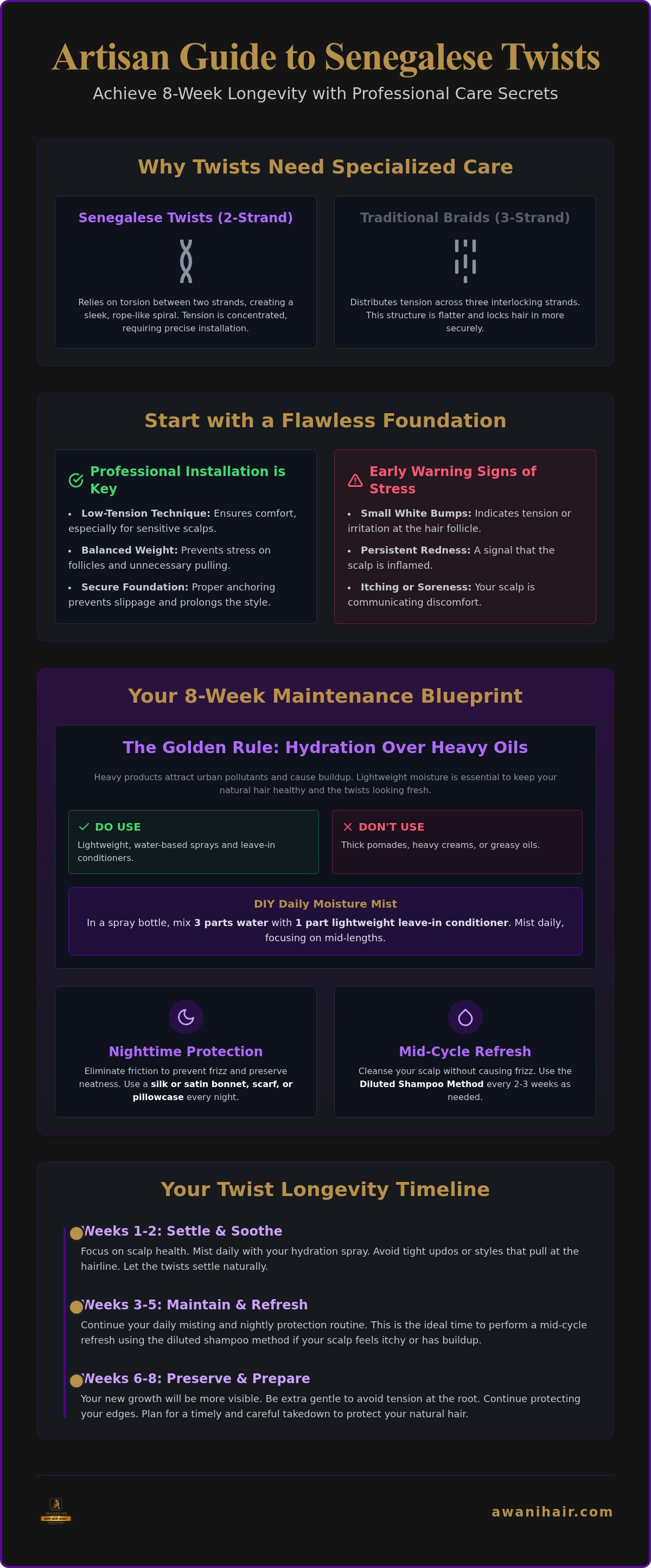
Senegalese twists are a sophisticated, two-strand protective style traditionally crafted using Kanekalon or Toyokalon hair. Unlike three-strand braids, which lock hair into a flat or rounded weave, these twists rely on a specific torsion that creates a sleek, spiraled aesthetic. This "rope-like" structure is beautiful, but it carries weight and tension differently than other styles. In a city like Brooklyn, where the air shifts from the dry heat of the subway to humid Atlantic breezes in a single afternoon, understanding hair twists and their unique needs is vital for any long-term wear. The "Brooklyn factor" isn't just about the weather; it's about a fast-paced lifestyle that demands a style that stays neat through long commutes and busy social schedules.
We believe in "Artisan Maintenance." This concept treats your hair as a collaborative project between you and your stylist. When you understand the mechanics of your twists, you can better mirror the care we provide in the chair. Professional installation at our Linden Blvd salon ensures that the foundation is secure, making the process of how to maintain Senegalese twists Brooklyn residents can rely on much simpler. By treating maintenance as a rhythmic extension of the initial service, you ensure both the beauty of the twists and the health of the natural hair beneath them.
Understanding the Two-Strand Tension
The way a twist carries weight differs significantly from traditional box braids. While braids distribute tension across three legs of hair, a Senegalese twist places it on two. This creates a specific mechanical pull that requires expert precision during the install to prevent slippage. Senegalese twists are a versatile, rope-like protective style that prioritizes hair health. If the root isn't anchored with the correct amount of tension, the twist can slide or cause unnecessary stress on the follicle. Starting with a professional, unhurried installation is the first step in a painless journey. When the weight is balanced from day one, your daily routine becomes about preservation rather than fixing mistakes.
Scalp Health for the Tender-Headed
For those with a sensitive scalp, the first week of any protective style is often the most critical. We prioritize an appointment-only environment to ensure every client receives dedicated, gentle care. This focus on a low-tension technique is essential for the tender-headed experience. You should watch for early signs of follicular stress, such as small white bumps or persistent redness at the hairline. These aren't just minor annoyances; they're signals that the scalp needs immediate, gentle hydration. Choosing a specialist who understands the anatomy of natural hair ensures your style is sustainable. A calm, tension-free root is the secret to a long-lasting look that never compromises your comfort.
Daily and Weekly Hydration: Keeping Twists Fresh in Brooklyn
Brooklyn's unique environment presents a specific challenge for protective styles. The city’s dust and fluctuating humidity can quickly dull the luster of your twists. To combat this, we adhere to the "Hydration over Heavy Oils" rule. Many people mistakenly reach for thick pomades or heavy creams to tame flyaways. However, these products act as magnets for urban pollutants, leading to a gritty buildup that's difficult to remove without unraveling the twists. Instead, choose lightweight, water-based sprays that penetrate the synthetic fiber to reach your natural hair. This keeps the style looking crisp and feeling weightless.
Mastering how to maintain Senegalese twists Brooklyn weather won't damage requires a shift in how you view moisture. Your natural hair is tucked away inside the twist, and it needs consistent hydration to remain elastic and strong. Without it, the hair can become brittle, increasing the risk of Traction alopecia if the hair breaks under the weight of the extension. A rhythmic, weekly scalp ritual will prevent the "Brooklyn itch" and keep your foundation healthy. If you’re unsure which products suit your specific hair texture, we’re always here to offer a personalized consultation at our Linden Blvd studio.
The Daily Moisture Mist
Consistency is the secret to a professional look that lasts eight weeks. You don't need expensive store-bought elixirs; a simple DIY mix often works best. Fill a spray bottle with three parts water and one part lightweight leave-in conditioner. Each morning, lightly mist your twists, focusing specifically on the mid-lengths where your natural hair ends. This ensures the most vulnerable part of your strand stays supple and hydrated. Avoid drenching the synthetic hair. Too much water makes the Kanekalon heavy, which can pull on your roots and cause unnecessary tension. A light, dew-like application is all you need for a refreshed, vibrant appearance.
Scalp Soothing for Sensitive Souls
The transition from a fresh install to a comfortable, "lived-in" feel usually takes about a week. If you experience sensitivity during this time, antimicrobial oils like tea tree or peppermint are your best allies. They provide an immediate cooling sensation and keep the scalp clean from environmental buildup. Use the "Dab, Don't Rub" method. Applying oil with a cotton swab or your fingertips in a gentle dabbing motion prevents friction at the roots. This technique preserves the neatness of our artisan work while providing the relief your scalp craves. It’s about creating a painless, soothing experience that honors your hair's health.
The Ultimate Night Routine for Senegalese Twists
Friction is the silent thief of a perfect install. While you sleep, the subtle movement of your head against a standard cotton pillowcase creates tiny snags in the Kanekalon fiber. Over time, these snags blossom into a halo of frizz that dulls the signature rope sheen of your twists. Mastering how to maintain Senegalese twists Brooklyn residents can wear with pride means treating your nighttime routine as a ritual of preservation. By eliminating friction, you extend the life of your style and keep your natural hair ends protected from moisture loss. A dedicated night routine ensures you wake up with the same precision and neatness you walked out with on day one.
Securing long twists is also a matter of physical comfort. Large, waist-length installs carry significant weight. If left loose, they can tangle or cause neck strain as you shift during the night. The goal is to keep the twists organized and stationary without applying new tension to your roots. This rhythmic approach to care turns a simple sleep cycle into an active part of your hair's eight-week journey.
Step-by-Step Nightly Protection
A consistent routine prevents the morning frustration of trying to "fix" a flattened or frizzy style. Follow these steps to keep your twists pristine:
- Step 1: Gather your twists into a high, loose "pineapple" on top of your head or a soft, low bun. This keeps the weight off your neck and prevents the twists from rubbing against your shoulders.
- Step 2: Apply a high-quality silk or satin bonnet. If your twists are exceptionally long, use a large satin scarf to wrap them securely from root to tip.
- Step 3: Use a satin pillowcase as a secondary fail-safe. If your bonnet slips off during the night, the smooth surface of the pillowcase will protect your edges from snagging.
- Step 4: Secure the very ends of the twists inside your wrap. This prevents the "rope" from unraveling or becoming fuzzy at the base.
Edge Preservation for Sensitive Scalps
Your hairline is the most delicate part of your style. One of the most common mistakes is tying a silk scarf too tight in an attempt to keep it secure. This creates unnecessary pressure on the follicles, which can lead to discomfort or thinning over time. Instead, focus on a snug but breathable fit. We recommend a gentle "Edge-Care" routine each night. Use your fingertips to provide light, circular stimulation to the scalp without pulling on the twists themselves. For more detailed insights on protecting your hairline, explore our guide on knotless vs traditional box braids Brooklyn tips. A healthy scalp is the foundation of every beautiful style, and a gentle night routine is the best way to honor that foundation.
Washing and Drying: The Mid-Cycle Refresh
Many people believe that washing Senegalese twists is a recipe for disaster. They fear the immediate onset of frizz or the potential for the twists to unravel. However, in the bustling environment of Brooklyn, your scalp acts as a filter for city dust, subway soot, and natural sweat. A mid-cycle wash is essential for maintaining hair health and scalp comfort. It removes the environmental buildup that leads to persistent itching and prevents the style from feeling heavy or "gritty." Learning how to maintain Senegalese twists Brooklyn residents can wear for the full eight weeks means mastering the art of the gentle, rhythmic refresh.
The secret to a successful wash lies in the consistency of your cleanser. You should never apply thick, creamy shampoo directly to your twists. These heavy formulas get trapped in the core of the rope-like structure, making them nearly impossible to rinse out completely. Instead, use the "Diluted Shampoo" technique. Mix a small amount of clarifying shampoo with water in a spray bottle. This creates a thin, soapy solution that moves effortlessly through the twists without leaving a sticky, dulling residue. This method ensures your hair remains light and vibrant throughout its lifespan.
The Scalp-First Wash Method
Precision is the hallmark of a dedicated artisan. Use your spray bottle to target the scalp directly, working in small, manageable sections. Instead of vigorous scrubbing, use the pads of your fingers to gently massage the skin between your parts. When it's time to rinse, let the water flow from the roots down the length of the twists. This "top-down" approach ensures that no product stays trapped in the center of the hair. Be sure to squeeze the twists gently with a microfiber towel rather than rubbing them together. This preserves the sleekness we achieved during your initial appointment. If your scalp feels particularly congested or stressed, book a professional maintenance session at our Linden Blvd studio to restore your style's original luster.
Drying Techniques for NYC Life
Drying is the most critical phase of the refresh process. In the humid Brooklyn climate, air-drying alone is often insufficient for thick or long twists. If the core of the twist remains damp for too long, it can develop an unpleasant "damp-smell" or even mildew. We recommend using a hooded dryer or a hand-held blow dryer on a cool, steady setting. This ensures the moisture is completely evaporated without causing heat damage to your natural hair or the synthetic fibers. Plan your wash for a weekend morning. This allows for a full 24-hour dry time before you head back into the city's hustle. A completely dry twist is a light, comfortable, and beautiful twist.
Why Brooklyn Trusts Awani for Senegalese Twists
Brooklyn's vibrant energy requires a hairstyle that is as resilient as it is beautiful. At Awani Hair Braiding, we view every set of twists as a narrative of care and longevity. Our Linden Blvd salon isn't just a place for a service; it's a sanctuary where we prioritize the individual comfort of every person who walks through the door. By focusing on a low-tension, meticulous approach, we ensure that your journey of how to maintain Senegalese twists Brooklyn weather won't disrupt begins with a flawless foundation. This commitment to precision means your twists remain neat, seamless, and vibrant through the city's unique environmental challenges.
We take immense pride in our craftsmanship. Our appointment-only model allows us to focus entirely on your hair's health, ensuring a calm and unhurried experience. This dedicated time is especially beneficial for tender-headed clients who require a gentler touch and a patient hand. When the installation is handled by a seasoned specialist, the subsequent weeks of maintenance become a simple, stress-free routine. We don't just provide a service; we offer a partnership in your hair's health and your personal confidence.
The Artisan Installation Process
The secret to an eight-week style lies in the initial sectioning. We use precise, clean lines that distribute the weight of the twists evenly across the scalp. This methodical professionalism prevents the heaviness often associated with synthetic extensions. Our specialization in lightweight, high-quality fibers ensures that your style remains comfortable and airy. We utilize low-tension techniques to protect your edges and promote healthy natural hair growth post-takedown. To understand our broader commitment to quality, explore our standards for African hair braiding in Brooklyn. We create sustainable foundations that make your daily care effortless.
Booking Your Transformation
Realizing your vision for a perfect protective style shouldn't be a rushed or transactional process. Our online booking system is designed to provide you with a private, dedicated session that honors your time. We believe every client deserves a tailored experience that addresses their specific hair texture and lifestyle needs. Choosing the right partner for professional braiding in Brooklyn ensures that your investment in your beauty pays off in lasting neatness and itch-free comfort. We invite you to begin your next aesthetic journey in our unhurried, artisan space. Book your painless Senegalese twist appointment at Awani Hair today and experience the transformative power of dedicated craftsmanship.
Your Journey to Lasting Elegance Starts Here
Mastering the art of how to maintain Senegalese twists Brooklyn humidity and dust can't touch is a rhythmic practice of care. By prioritizing lightweight hydration over heavy oils and committing to a consistent nighttime routine, you ensure your twists remain a vibrant expression of your style for the full eight weeks. These small, daily actions preserve the precision of your install while fostering the long-term health of your natural hair. A professional foundation is the most critical step in this journey, as it simplifies every aspect of your at-home maintenance.
At Awani Hair Braiding, we are dedicated artisans specializing in low-tension protective styling that respects your scalp's sensitivity. Our private, appointment-only Brooklyn salon offers a calm sanctuary where your hair's health is our primary focus. We bring expert knowledge to every set of twists, ensuring a painless experience and robust natural hair growth post-takedown. We invite you to experience this meticulous level of care for yourself. Book your professional Senegalese twist appointment at Awani Hair and let us partner with you in achieving a look that stays as flawless as the day it was created. Your path to beautiful, sustainable hair starts with a single, unhurried session.
Frequently Asked Questions
How long do Senegalese twists typically last with good maintenance?
Senegalese twists typically last between six and eight weeks when you follow a dedicated artisan maintenance routine. Their longevity depends on how well you protect the hair at night and manage environmental moisture in the city. Beyond the eight-week mark, the new growth at your roots can lead to matting or unnecessary tension, making it essential to schedule a professional takedown to preserve your natural hair health.
Can I swim in the ocean or pool with my Senegalese twists?
You can certainly enjoy the water, but it requires immediate aftercare to prevent the twists from becoming heavy or frizzy. Saltwater and chlorine can strip moisture from the natural hair tucked inside the extension, leading to brittleness. Always rinse your twists thoroughly with fresh water immediately after swimming and follow up with a lightweight leave-in conditioner mist to restore hydration and maintain the sleek, rope-like sheen.
What is the best way to stop my scalp from itching under my twists?
The most effective way to soothe an itchy scalp is by using light, antimicrobial oils like tea tree or peppermint. These oils provide an immediate cooling sensation and address the environmental buildup that often causes irritation. Apply the oil directly to the scalp using a cotton swab to avoid disturbing the neatness of the twists. This targeted approach is a key part of how to maintain Senegalese twists Brooklyn weather won't irritate.
How do I prevent the ends of my Senegalese twists from unraveling?
Preventing unraveling starts with a professional installation where the ends are properly sealed using the hot water dipping method. At home, avoid excessive manipulation or friction on the tips of the twists. If you notice a tip beginning to loosen, you can carefully re-dip the very end in hot water or use a tiny amount of hair adhesive for a temporary fix until your next maintenance session at our studio.
Is it normal for my twists to feel heavy for the first few days?
It's completely normal for your twists to feel slightly heavy for the first two to three days as your scalp adjusts to the added weight of the extensions. This sensation should dissipate quickly as the style settles and the roots loosen slightly. If the heaviness is accompanied by sharp pain or visible bumps at the hairline, it may indicate excessive tension, and you should contact your specialist for a gentle adjustment.
How often should I moisturize my hair while it's in twists?
You should mist your twists with a water-based leave-in conditioner every morning to keep your natural hair supple and elastic. On a weekly basis, focus on a more thorough scalp hydration ritual using lightweight oils that won't cause buildup. This consistent rhythm prevents the hair from becoming brittle and ensures a painless takedown process. Regular hydration is essential for how to maintain Senegalese twists Brooklyn residents can wear with confidence.
What are the signs that it's time to take my twists out?
Look for visible signs such as more than an inch of new growth, significant frizz at the roots, or twists that feel heavy and start to sag away from the scalp. If you notice your natural hair beginning to mat or tangle around the base of the extension, it's time for a professional removal. Keeping twists in for longer than eight weeks can lead to breakage and unnecessary stress on your follicles.
Can I style my twists into a bun immediately after getting them done?
We recommend waiting at least three to five days before styling your twists into a high bun or tight ponytail. Your scalp needs a short period to recover from the initial installation tension. Pulling the twists into a restrictive style too early can cause tension bumps or damage your delicate hairline. For the first few days, enjoy low-tension styles like wearing them down or in a very loose, low ponytail.


