
What if the protective style you've been avoiding is actually the secret to reclaiming your hairline’s health? For many, the sight of a thinning hairline brings a wave of self-consciousness and the quiet fear that traditional braiding might only make things worse. You've likely felt the weight of heavy extensions or the sharp sting of tension from past styles that left your scalp visible and your confidence shaken. It's a common dilemma, but choosing knotless braids for thin edges doesn't have to be a risk. When installed with precision, it becomes a strategic tool for your hair's recovery.
We believe your hair journey should be defined by care and longevity rather than compromise. You'll learn how to safely enjoy the effortless beauty of braids while protecting and regrowing your delicate hairline with expert, low-tension techniques. This guide explores the artistry of meticulous sectioning, the best lightweight hair textures for fine strands, and the essential daily habits that keep your scalp nourished. From selecting the right braid size to achieving a seamless, natural finish, we're providing the clarity you need to style with absolute confidence.
Key Takeaways
- Discover why the gradual feed-in method eliminates the root-tugging tension commonly found in traditional styles.
- Master the 48-hour preparation protocol to ensure your scalp is a healthy, clean slate before your appointment.
- Understand how specific sizing and the "leave-out" strategy make knotless braids for thin edges a safe and flattering choice.
- Learn the essential 4-6 week maintenance rule and nightly protection habits that foster long-term edge recovery.
- Realize the importance of partnering with a specialist who prioritizes your hair health and meticulous, tension-free craftsmanship.
Why Knotless Braids are the Best Choice for Thin Edges
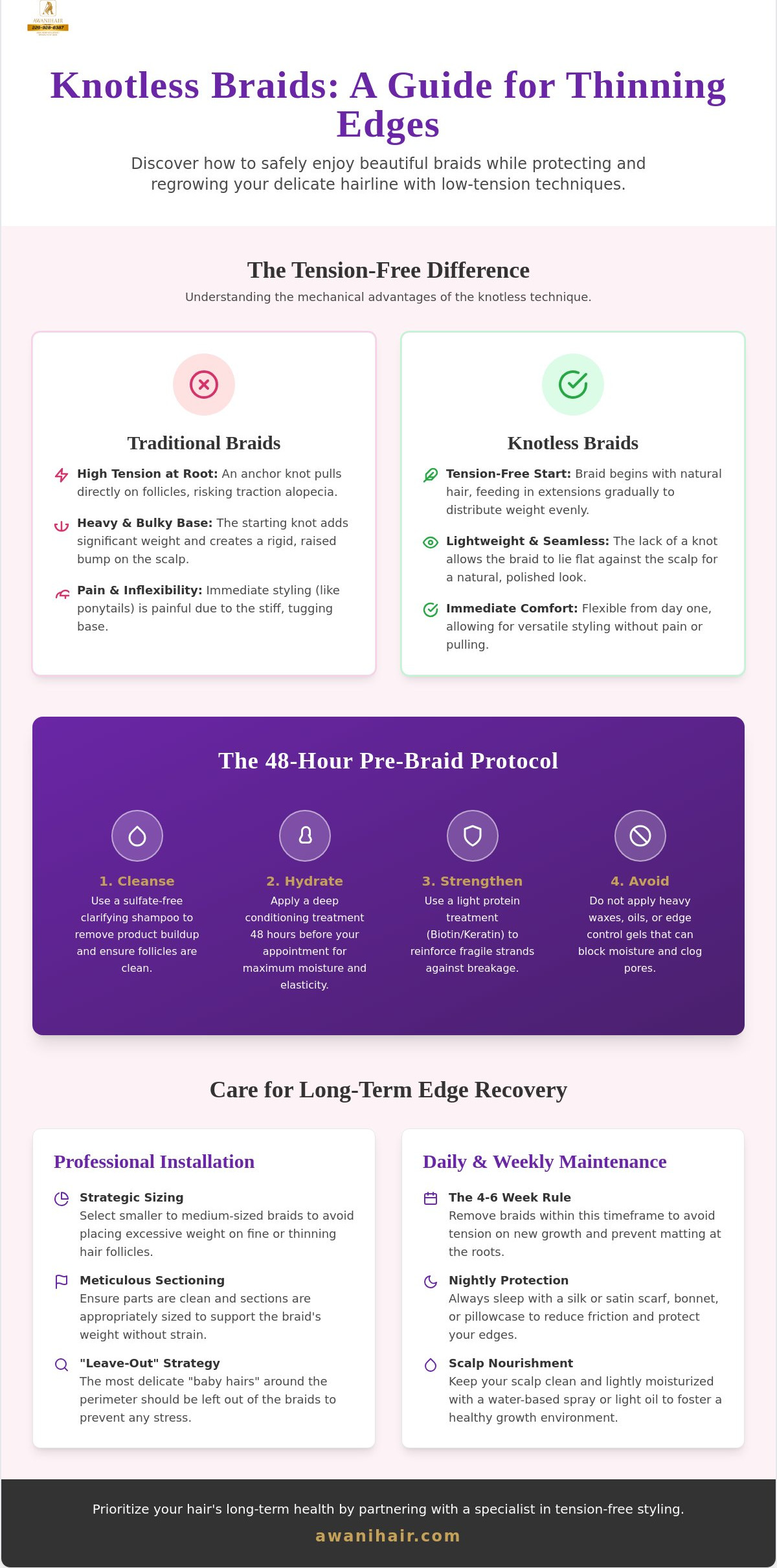
Choosing a protective style shouldn't feel like a gamble with your hairline. For years, traditional braiding methods relied on a tight anchor knot at the root. This knot creates a heavy focal point of heavy tension. It pulls directly on the most delicate follicles. Knotless braids for thin edges change the physics of the braid entirely. Instead of a heavy start, the stylist begins with your natural hair. Extensions are fed in gradually. This distributes the weight across the entire length of the braid. No single point of stress. It's a more meticulous approach. It respects the integrity of your natural strands while providing a seamless, polished finish.
While the history of box braids reflects a rich cultural heritage of artistry, the knotless modification is a modern response to the need for tension-free styling. It's about longevity. It's about comfort. The lack of a bulky knot means the braid lies flat against the scalp. This reduces the physical "tug" when you move your head or sleep. Beyond the physical ease, there's a significant psychological benefit. You can walk out of the salon feeling beautiful and confident, knowing your edges aren't being sacrificed for the sake of the style. It's a collaborative process between you and your stylist to ensure your hair heals while it's tucked away.
Understanding Traction Alopecia and the Hairline
Edge thinning often stems from repetitive tension. This leads to traction alopecia. It's a condition where the hair follicle is under constant strain, eventually causing it to detach. The perimeter of your scalp is naturally more vulnerable. These hairs are often finer and have shorter root systems than the hair in the center of your head. When a style is too heavy, it forces the follicle into a premature resting phase. Growth stops. Recovery becomes difficult. Using knotless braids for thin edges ensures that we avoid this strain, keeping the follicle active and healthy.
Mechanical Advantages of the Knotless Technique
The primary advantage is the lack of an anchor knot. This creates a flat, seamless finish that rests gently against the scalp. Because there's no bulge at the root, the braid is flexible from day one. You can style your hair into a ponytail or bun immediately. No pain. No tugging sensation. This precision allows your hairline to rest. You get a high-quality result without the typical "break-in" period of traditional braids. The weight is shared across the braid, making it feel lightweight and natural. It's the ultimate choice for those who value both aesthetic beauty and long-term hair health.
Preparing Your Hairline: The 48-Hour Pre-Braid Protocol
The foundation of a truly protective style begins long before you arrive at the salon. When you're planning for knotless braids for thin edges, your hair needs a specific environment to thrive. This starts with a clean slate. A clarified scalp ensures that follicles aren't clogged by old products or environmental debris. This is vital because clogged pores can stifle new growth and weaken the hair at the root. Use a sulfate-free clarifying shampoo to remove buildup without stripping the natural oils that protect your scalp's delicate pH balance.
Timing is everything. Aim to complete your moisture infusion exactly 48 hours before your appointment. This window allows the hair to fully absorb the nutrients and return to its natural state of elasticity. Avoid heavy waxes or edge control gels during this time. These products create a barrier that prevents moisture from penetrating the hair shaft. Instead, focus on a deep conditioning treatment that prioritizes hydration. This provides the flexibility needed to withstand the braiding process without snapping. If you're concerned about the current state of your hairline, a professional consultation can help determine if your hair is ready for a new style.
Strengthening Fragile Hairs with Protein
Fragile edges benefit from structural support. A light protein treatment can reinforce the hair shaft by filling in gaps in the cuticle. Look for ingredients like Biotin and Keratin. These help rebuild the hair's resilience. It creates a temporary shield around the strand. Be careful with the frequency, though. Too much protein causes brittleness, which is the opposite of what we want for delicate strands. A single, light application is usually enough to prep for your style. Focus the application on the mid-lengths and ends, but give the perimeter a gentle touch to ensure those fine hairs are bolstered.
Scalp Stimulation and Moisture Infusion
Healthy growth depends on consistent blood flow. Spend five minutes each night massaging your scalp with your fingertips. This simple action increases circulation to the follicles. It's especially important if you've previously experienced traction alopecia and are looking to regrow lost hair. Use a gentle steam treatment, like a warm towel, to open the cuticles before applying your leave-in products. This allows the moisture to reach the very core of the hair shaft.
To seal in this vital hydration, follow the LOC method: a three-step process of applying a liquid or leave-in conditioner, an oil to lock in moisture, and a cream to smooth the cuticle. This ensures your strands remain supple while tucked away in knotless braids for thin edges. If you need help choosing the right products for your texture, our team at Awani Hair Braiding is always here to offer personalized advice. Proper preparation is the first step in a collaborative journey toward hair health and confidence.
The Installation: Professional Techniques for Thinning Hair
The actual installation of knotless braids for thin edges is where artistry meets engineering. Much like the specialized structural strengthening provided by Composites Construction UK, a master artisan understands that not every strand is meant to be braided. We call this the 'Leave-Out' strategy. If a hair is too short or lacks the structural integrity to support the weight of an extension, it's left out. This preserves the follicle and prevents unnecessary stress. It's a choice that prioritizes your future hair health over a temporary aesthetic look. By leaving those finest "fuzz" hairs alone, we ensure the perimeter stays healthy and ready for regrowth.
Communication during your appointment is just as vital as the technique itself. You should never feel hesitant to speak up about tension. A professional environment is a collaborative one. If a section feels too tight, it likely is. We use the 'Feathering' method to add extension hair slowly and strategically. This ensures the start of the braid remains as light as a feather. The braid only gains density as it moves away from the sensitive root area. This meticulous layering creates a seamless transition that looks natural and feels incredibly comfortable from the moment you leave the chair.
Sizing is another critical factor. While micro-knotless braids are popular, they are often too heavy for those with a delicate hairline. We generally recommend medium to large sizes for those with thinning areas. These styles provide the visual impact you desire without the concentrated weight that smaller braids impose on individual follicles. It's about finding the "sweet spot" where the style looks lush and full while remaining completely safe for your edges. A larger base provides more support, making the overall style much more durable and less likely to cause pulling.
The Weight-to-Base Ratio Explained
Precision in sectioning is the secret to a safe protective style. The section of natural hair, or the "base," must always be stronger than the weight of the braid attached to it. For those with thin strands, we calculate the right amount of extension hair with meticulous care. Larger parts can actually be safer. They provide a broader foundation to distribute the load across more natural hairs. Small, heavy braids on tiny sections are a recipe for breakage. We aim for a harmonious balance that looks full but feels weightless on your scalp.
Safe Edge Management During the Appointment
Social media often promotes an obsession with perfectly "laid" baby hairs using high-alcohol gels. While the look is sleek, these gels can suffocate the follicle and lead to further thinning. We prefer soft-hold mousses or water-based edge balms. They provide a neat finish without the risk of drying out your hair or clogging pores. It's about creating a beautiful frame for your face while respecting the heritage of your natural texture. This level of care is why you should schedule a knotless braids appointment Brooklyn with a specialist who understands the nuances of fragile hair. We treat every appointment as a step in your personal aesthetic journey, ensuring you feel confident and cared for.
Post-Braid Maintenance and Edge Recovery
The work doesn't end when you leave the salon chair. Maintaining knotless braids for thin edges requires a disciplined approach to moisture and timing. While many online tutorials suggest wearing protective styles for eight weeks or more to maximize your investment, this is a significant risk for fragile hairlines. Long wear-times are a primary cause of edge damage. For those with thinning areas, we strictly recommend the 4-6 week rule. This timeframe allows you to enjoy the aesthetic beauty of your braids while ensuring the hair isn't under prolonged weight as it grows away from the scalp. Frequent breaks are essential for the follicle to rest and recover.
Nightly protection is your second line of defense against breakage. The friction from a standard cotton pillowcase can snag fine hairs and sap vital moisture. A satin bonnet is an excellent tool for keeping braids contained and reducing movement while you sleep. However, if you find bonnets uncomfortable, a high-quality silk pillowcase is a sophisticated alternative. It allows the hair to glide across the surface without catching on fibers. Both options are essential for preserving the neatness of your style and the long-term health of your perimeter. It's a small habit that yields transformative results for your hair's longevity.
Daily Scalp Care for Growth
Consistency is the key to edge recovery. Use lightweight oils like Rosemary or Peppermint for daily stimulation. These specific oils encourage blood flow to the follicles without leaving a heavy, pore-clogging residue. A water-based leave-in spray provides the necessary moisture to keep your new growth supple and resilient. To cleanse your scalp without disturbing the braids, use a microfiber cloth dampened with a diluted, sulfate-free shampoo. Gently dab between the parts to remove salt from sweat and environmental dust. This keeps the environment around your follicles clean and primed for healthy growth.
The 'Red Flag' Removal Checklist
You must remain a vigilant guardian of your hairline throughout the duration of your style. If you notice small, red tension bumps around the perimeter, your hair is sending a distress signal. These bumps can lead to permanent scarring and hair loss if they aren't addressed immediately. Another critical sign is the appearance of tiny white bulbs at the root of the braid. This indicates the hair has been pulled from the follicle entirely. Itching is also a common warning sign. While some believe it's just a sign of dirt, it's often a symptom of scalp inflammation or tension-related distress. If you experience any of these red flags, it's time to take the braids down.
Your hair journey is a collaborative process, and we're here to ensure every step is taken with care. Don't let a protective style become a source of stress for your delicate edges. If you're ready to experience a professional, health-first approach to styling, book an appointment with our trusted specialists today. We take pride in our meticulous craftsmanship and our commitment to your personal confidence.
Why Awani Hair Braiding is Brooklyn's Specialist for Fragile Hair
Awani Hair Braiding serves as a sanctuary for those who view their hair as a form of personal expression. In the heart of Brooklyn, we've built a reputation as the trusted specialist for fragile hair and delicate perimeters. Our philosophy is rooted in a health-first approach. We believe that a protective style should never come at the cost of your natural hair's integrity. For clients seeking knotless braids for thin edges, we offer more than just a service. We provide a strategic, collaborative plan for hair recovery. Every session is held in a private, appointment-only setting. This ensures you receive our undivided attention and meticulous care without the distractions of a busy commercial salon. It's a peaceful environment designed for comfort and professional results.
Our pride in craftsmanship is reflected in every braid we create. We position ourselves as seasoned artisans who honor the heritage of traditional techniques while embracing modern, tension-free innovations. This balance of artistic passion and methodical professionalism is what sets our studio apart. We don't just follow trends. We create sustainable styles that grow with you. By treating every interaction as a creative journey, we build lasting trust with our community. You aren't just another appointment; you're a partner in a shared vision for beauty and health.
A Custom Approach to Every Hairline
We recognize that every hairline tells a different story. When working with thinning areas, we modify parting patterns with absolute precision to ensure the weight is distributed safely across the scalp. This specialized sectioning prevents the "tugging" often associated with standard braiding. We exclusively use high-quality, lightweight extensions that mimic the natural movement and feel of your own strands. Our deep expertise in box braids Brooklyn and tension-free knotless styles allows us to create beautiful, seamless results that look lush without being heavy. Education is also a pillar of our service. We teach you exactly how to maintain your scalp health and hydration between your visits to ensure your knotless braids for thin edges remain a truly protective choice.
Booking Your Journey to Healthier Hair
Your first visit to our Brooklyn studio begins with a personalized, thorough consultation. We assess your current edge health and listen to your past experiences before a single strand is braided. This honest, professional assessment is why our clients trust us with their most delicate hair concerns. We take deep pride in our work, ensuring every finish is polished and every client feels confident. You'll leave our chair feeling both inspired and well-informed about your hair's progress. The transition from your consultation to the final reveal is seamless, organized, and entirely stress-free. Ready for a change? Book your appointment at Awani Hair Braiding today.
Begin Your Journey Toward Restored Confidence
Reclaiming the health of your hairline is a collaborative process that starts with the right technique. By choosing knotless braids for thin edges, you're making a strategic decision to prioritize longevity over temporary trends. You've learned how meticulous preparation, the "leave-out" strategy, and a disciplined maintenance schedule work together to foster recovery. This approach ensures your hair remains tucked away safely while your follicles receive the rest they deserve. It's about more than just a style; it's about a long-term commitment to your personal confidence and aesthetic story.
At our professional Brooklyn salon, we take deep pride in being specialists in protective styling. We offer an appointment-only experience designed for personalized care and undivided attention. Every braid is a testament to our artisan craftsmanship and our dedication to your hair's unique narrative. You don't have to choose between beauty and health when you have a trusted specialist guiding your path. Book your painless knotless braids appointment at Awani Hair Braiding today. We look forward to supporting your transition to a stronger, more vibrant hairline.
Frequently Asked Questions
Can I get knotless braids if my edges are completely bald?
It's generally not recommended to install braids over areas that are completely bald because there's no hair to anchor the extension safely. Attempting to braid on a smooth scalp can put undue stress on the surrounding skin and follicles, which may hinder future regrowth. Our specialists prefer to braid the healthy hair nearby and leave the delicate spots free to recover with targeted topical treatments.
How long should I keep knotless braids in if I have thin hair?
You should limit the wear-time of your style to four to six weeks if you have fine or thinning hair. While the knotless technique is gentle, the natural growth of your hair eventually shifts the weight of the braid further from the root. This change in balance can create a pulling effect on fragile edges. Keeping your style within this timeframe ensures your hairline stays protected.
Do knotless braids cause more damage than traditional box braids?
No, knotless braids are significantly safer than traditional box braids because they eliminate the heavy anchor knot at the root. Traditional methods often create a high-tension focal point that can lead to breakage or traction alopecia. By gradually feeding in hair, the weight is distributed evenly. This makes knotless braids for thin edges the superior choice for those prioritizing scalp health and hair retention.
What is the best oil to use on my edges while wearing braids?
Lightweight, stimulating oils like Rosemary or Peppermint are the best choices for edge care while wearing braids. These specific oils encourage circulation to the follicles without leaving a heavy, pore-clogging residue. We recommend applying a small amount to your fingertips and gently massaging the perimeter of your scalp two to three times a week to support healthy growth and maintain essential moisture.
How can I tell if my braids are too tight on my edges?
You can identify excessive tension by looking for small red bumps, white bulbs at the root, or persistent scalp pain. Your braids should feel comfortable and flexible from the moment they're installed. If you feel a constant tugging sensation or see the skin around your hairline being pulled taut, the braids are too tight. It's vital to address these signs immediately to prevent long-term damage.
Should I wash my knotless braids if I'm worried about my hairline?
Yes, you should keep your scalp clean, but focus on a targeted cleanse rather than a full immersion. Use a microfiber cloth dampened with diluted, sulfate-free shampoo to gently dab the parts and the hairline area. This removes sweat and buildup that can cause itching and inflammation. Keeping the scalp clean ensures a healthy environment for your edges to grow without disturbing the integrity of the braids.
What size knotless braids are safest for thinning edges?
Medium to large knotless braids for thin edges are the safest options because they provide a broader base of support for the extensions. Small or micro braids often attach a significant weight to a very tiny section of natural hair, which can lead to snapping. A larger base distributes the load more effectively, ensuring that no single follicle is under too much stress during the life of the style.
How many weeks should I wait between braiding appointments?
We recommend waiting at least two to four weeks between braiding appointments to give your hairline a necessary rest period. This breathing room allows your scalp to recover from the weight of extensions and gives you time to perform deep conditioning treatments. Constant braiding without breaks can lead to cumulative tension, so patience is key to maintaining a thick and healthy hairline over the long term.


