

What if the persistent itchiness you've accepted as a braid rite of passage is actually a cry for help from your skin? In 2026, the skinification of hair has taught us that protective styling should never mean ignoring your roots. You likely know the frustration of a fresh set of knotless braids being interrupted by visible build-up or a nagging, restless itch. It's a common struggle that can make even the most meticulous artistry feel like a burden. Mastering scalp care for braids is the essential shift that transforms your experience from temporary beauty into a journey of long-term hair health.
We believe that a rhythmic maintenance ritual is just as vital as the initial install. You deserve a style that lasts six to eight weeks without compromising your comfort or the safety of your edges. This comprehensive checklist serves as your supportive guide to professional-level care. We'll explore the latest techniques, from pH-balanced refreshing sprays to soothing oil rituals, ensuring your scalp remains a healthy, clean foundation for growth. It's time to enjoy a seamless look that feels as good as it looks.
Key Takeaways
- Establish a clean foundation with a pre-installation scalp detox to prevent early product buildup and irritation.
- Master the "No-Frizz" cleansing method to maintain effective scalp care for braids without compromising your style's neatness.
- Understand the vital difference between hydrating hair fibers and oiling the skin to avoid clogged pores and scalp discomfort.
- Protect your edges by identifying "danger zone" tension and adopting rhythmic nighttime protection habits for better longevity.
- Choose low-tension techniques like knotless braids to ensure a painless experience that supports healthy growth post-takedown.
The Pre-Installation Ritual: Setting the Foundation for Scalp Health
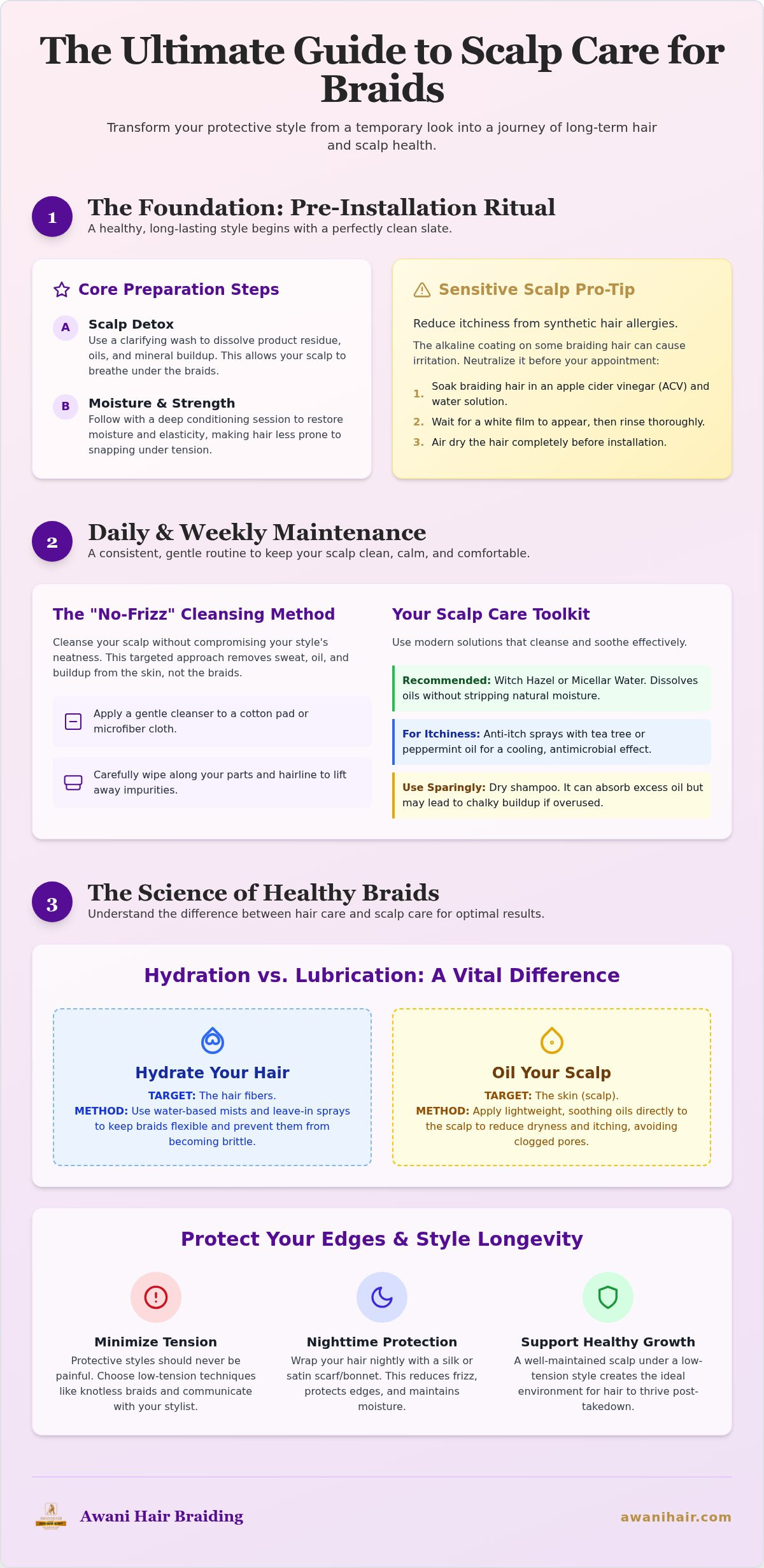
A successful protective hairstyle begins long before the first part is made. Think of your scalp as the soil for a garden; if the foundation is cluttered with debris, the growth beneath will struggle. Many clients overlook the fact that braids trap whatever is currently on the skin. If you begin your journey with lingering product residue or old sebum, you are essentially inviting irritation to stay for the next six weeks. Establishing a clean slate is a non-negotiable step for effective scalp care for braids.
The process of scalp detoxing is your first line of defense. Over time, heavy oils and styling gels create a stubborn film that standard shampoos might miss. Using a dedicated scalp treatment or a clarifying wash helps dissolve this barrier, allowing your pores to breathe. This is particularly vital in Brooklyn, where local water can deposit minerals that leave hair feeling brittle. By removing these impurities, you ensure that the soothing oils and hydrating mists you use later can actually reach the skin rather than sitting on top of a layer of grime.
Preparation also requires a delicate balance of strength and softness. While clarifying is essential, you must follow it with a deep conditioning session to restore moisture. Braiding puts a specific type of weight on the hair shaft. If the hair is dry or compromised before the install, it is more prone to snapping. A high-quality deep conditioner provides the elasticity needed to handle the tension of a fresh set of knotless braids or cornrows.
The Ultimate Pre-Appointment Checklist
To arrive at your session ready for a seamless experience, follow these specific steps:
- Perform a thorough clarifying shampoo session to remove mineral build-up from NYC water.
- Conduct a protein-moisture balance check; hair should feel strong but remain flexible.
- Ensure your hair is completely detangled and gently blown out to allow for precision parting.
For a more detailed breakdown of these steps, read our full guide on how to prep hair for braiding appointment.
Addressing the Synthetic Hair Allergy
That immediate, intense itch many people feel after getting braids isn't always about tension. It is often a reaction to the alkaline coating used on synthetic braiding hair to make it heat-resistant. For those with sensitive skin, this coating is a major trigger for inflammation. You can easily neutralize this at home with an apple cider vinegar (ACV) soak. Submerge the braiding hair in a mix of water and ACV until a white film appears, then rinse and air dry. Choosing high-quality hair from the start, combined with this DIY detox, significantly reduces the risk of a reactive scalp.
Daily and Weekly Maintenance: Keeping Your Scalp Clean and Calm
Living in Brooklyn means your hair faces unique environmental stressors. Between the humid subway platforms and urban dust, your skin requires consistent attention to stay healthy. Effective scalp care for braids isn't about heavy products; it's about rhythmic, gentle maintenance that prevents buildup before it starts. If you've ever experienced "braid funk" during a New York summer, you know that sweat and environmental pollutants can quickly compromise your comfort. A proactive routine keeps your parts crisp and your skin breathable.
The "No-Frizz" cleansing method is your secret weapon for mid-week refreshes. Instead of soaking your entire head, which can lead to heavy, damp braids and premature frizz, focus purely on the exposed skin. Use a soft microfiber cloth or cotton pad to wipe along your parts. This targeted approach removes salt from sweat and prevents the itching that often leads to scalp irritation. It's a simple ritual that preserves the artistry of your install while ensuring your foundation remains pristine.
The Cleansing Tools You Need
Modern maintenance has moved beyond harsh antiseptics. We recommend using witch hazel or micellar water for their ability to dissolve oils without stripping moisture. These are far more sophisticated than traditional alcohol-based cleaners. If you're dealing with early-stage tension or minor itching, look for anti-itch sprays containing tea tree or peppermint oil. These ingredients provide an immediate cooling sensation and possess natural antimicrobial properties. While dry shampoo can be helpful for absorbing excess oil, use it sparingly; too much can create a chalky residue that is difficult to remove during your eventual takedown.
Washing Your Braids: The Professional Way
When a deeper clean is necessary, skip the heavy-handed scrubbing. Mix a sulfate-free shampoo with water in a spray bottle to create a diluted solution. This allows you to apply the cleanser directly to the roots without disturbing the hair fibers. After rinsing, the "Pat Dry" rule is absolute. Gently squeeze your braids with a lint-free towel rather than rubbing them. This prevents the growth of mildew within the damp centers of your braids and keeps the weight manageable. For those navigating the hottest months, our guide on summer protective styles Brooklyn offers additional tips for keeping your look vacation-ready.
Maintaining this balance ensures your scalp stays as beautiful as your style. If you feel your braids need a professional touch-up or a deeper scalp refresh, consider booking your next maintenance session with a specialist who understands your hair's narrative.
Hydration vs. Lubrication: The Science of Oiling Your Scalp
Many people mistake oil for moisture, but in the world of scalp care for braids, confusing the two can lead to significant discomfort. Oil is a sealant; it lacks the water molecules necessary to actually hydrate your skin or hair. When you apply heavy grease to a dry scalp, you aren't fixing the dryness. You're simply placing a waterproof barrier over it. This often traps the existing dryness underneath while creating a playground for bacteria on the surface. Understanding this distinction is the first step toward a comfortable, long-lasting style.
Heavy greases and thick, petroleum-based oils are frequent culprits behind clogged pores. When your pores can't breathe, you risk developing folliculitis, a painful inflammation of the hair follicles that often appears as small, itchy bumps around the roots. This condition doesn't just ruin the aesthetic of your parts; it can actively hinder hair growth. A healthy scalp requires a delicate balance. It needs to be clean enough for oxygen to reach the pores but supple enough to prevent cracking and irritation.
How do you know if your scalp is truly dry or just needs a wash? If your skin feels tight and displays fine, powdery flakes immediately after a light misting of water, it's likely dehydrated. However, if the flakes are oily, yellowish, or accompanied by a distinct odor, you're dealing with product build-up or sebum. In the latter case, adding more oil will only worsen the "braid funk" we discussed in previous sections. A clean wash is the only solution for a congested scalp.
Selecting the Right Oils for Your Scalp Type
Scalp lubrication involves applying oils to the skin to soothe and protect the surface, while hair hydration refers to the process of infusing the hair fiber itself with water-based moisture. For those with normal to oily skin, lightweight options like jojoba or grapeseed oil are ideal because they mimic the body's natural sebum. If you struggle with persistent itching or dandruff, look for oils infused with tea tree or rosemary. These botanicals offer natural antiseptic properties that calm inflammation without the heavy, pore-clogging weight of traditional hair greases.
Moisturizing the Hair Inside the Braid
Your natural hair continues to need nourishment while it's tucked away. The "LCO" method (Liquid, Cream, Oil) works beautifully for braids when adapted for accessibility. Start with a water-based leave-in spray that can penetrate the braid's structure. Focus your attention on the "new growth" area near the roots as your hair grows out. This is where the hair is most vulnerable to snapping. Avoid heavy, buttery creams; these frequently get trapped at the base of the braid, resulting in those frustrating "white balls" of residue that are nearly impossible to wash out without ruining the style's neatness.
Nighttime Protection and Tension Management
Your sleep environment dictates the longevity of your style and the health of your skin. Friction is the silent enemy of neatness. When you toss and turn on cotton pillowcases, the fabric absorbs the moisture you worked so hard to apply in your scalp care for braids ritual. It also tugs at the roots, creating tiny tears in the hair fiber and leading to premature frizz. Silk and satin are essential tools for any protective journey. Their smooth, non-absorbent surface allows braids to glide without snagging, preserving both the moisture in your scalp and the precision of your parts.
Protecting your edges requires a specialized, gentle approach. This perimeter contains the finest, most vulnerable hairs on your head. Excessive tension here doesn't just cause temporary discomfort; it can lead to permanent thinning or traction alopecia. We view edge protection as a vital part of our craftsmanship. Your nighttime routine should focus on relieving the day's stress from these follicles while ensuring they remain hydrated. By nurturing these delicate areas, you ensure that your hair remains thick and healthy long after the braids are removed.
The Nightly Scalp Care Routine
Consistency is the secret to a comfortable scalp. Follow these four rhythmic steps every evening to maintain a healthy foundation:
- Step 1: Apply a light mist of water or rosewater to the roots to provide essential hydration.
- Step 2: Massage the scalp for two minutes using your fingertips to stimulate blood flow and soothe the skin.
- Step 3: Secure your braids in a loose pineapple or a low bun to prevent them from pulling as you move.
- Step 4: Cover your hair with a high-quality silk bonnet or scarf to lock in moisture and reduce friction.
Signs Your Braids are Too Tight
Identifying "danger zone" tension early can save your hairline. If you notice small, red "tension bumps" or white pustules around your follicles, your braids are too tight. This is your skin's inflammatory response to excessive pulling. You should never "tough it out" with a painful installation. Pain is a signal of distress, not a requirement for beauty. If the discomfort persists for more than 48 hours, the tension is likely too high. For those with sensitive scalps, we often recommend exploring knotless vs traditional box braids to find the most comfortable, low-tension fit for your lifestyle.
Prioritizing your comfort is the ultimate form of self-care. If you are experiencing persistent tension or want to ensure your next style is installed with artisan-level care, consider scheduling your next professional braiding appointment with a specialist who values your hair's health as much as its aesthetic.
Professional Scalp Care at Awani Hair Braiding Brooklyn
At Awani Hair Braiding, we believe that true beauty shouldn't come with a side of discomfort. We've built our reputation on the "painless" installation, a standard that sets the stage for effortless scalp care for braids. It's a meticulous process. We don't just braid hair; we curate a protective experience that honors your skin's sensitivity. By choosing low-tension methods from the very first part, we ensure your journey begins with ease rather than inflammation. This professional foundation makes your daily maintenance much simpler.
Many salons prioritize a temporary "neatness" that relies on extreme tension. We take a different path. We prioritize the health of your edges, understanding that these delicate hairs are the most vulnerable part of your scalp. Our artisan-level precision focuses on longevity and protection. You won't find us pulling too tight for the sake of a sharp line. Instead, we use methodical parting to distribute the weight of the extensions evenly. This prevents the follicle stress that leads to thinning and ensures your hair remains healthy post-takedown.
Our appointment-only model is a deliberate choice. It creates a stress-free environment where your hair is the sole focus. There are no walk-in interruptions to rush the process. This dedicated time allows for personalized consultations where we can discuss your specific scalp needs. Whether you're dealing with seasonal dryness or urban pollution, we're here to guide your aesthetic journey with professional authority and warm hospitality. Every session is a collaborative creative process designed for your personal confidence.
The Awani Difference in Brooklyn
We specialize in knotless techniques that reduce scalp stress from day one. It's about more than just the look; it's about the narrative of your hair's growth. Our precision parting ensures that each braid has a healthy base, preventing the sagging that often causes itching. We also provide clear guidance on when to take your braids down. Staying within the six to eight-week window is vital to prevent matting at the roots. We want your natural hair to be thriving when the braids come out.
Book Your Healthy Braid Experience
Scheduling your private session is a straightforward invitation to begin your hair health journey. During your scalp and hair health assessment, we'll analyze your current condition and recommend the best rituals for your lifestyle. We take deep pride in being a supportive guide for our Brooklyn community. For a glimpse into the creative possibilities of our work and why clients trust our meticulous skill, explore The Art of Box Braids. We invite you to realize a vision of beauty that feels as good as it looks.
Elevate Your Protective Journey with Conscious Care
Your path toward healthier, more vibrant hair is a continuous narrative that thrives on consistency. By mastering scalp care for braids, you move beyond simply wearing a style to actively nurturing your hair's future. The foundation of this success lies in the balance we've explored: starting with a pristine, detoxed scalp; maintaining a clean environment through targeted refreshes; and understanding the vital difference between hydrating the hair fiber and lubricating the skin. These rhythmic rituals ensure your braids remain a source of confidence rather than a cause of irritation.
True artistry in braiding requires a specialist who values your comfort as much as your aesthetic. As Brooklyn’s trusted artisan for protective styles, we focus on meticulous, low-tension knotless techniques that prioritize your edges and overall scalp health. Our dedicated appointment-only salon experience provides the personalized, stress-free environment your hair deserves. Let us help you realize a vision of beauty that supports lasting growth and physical ease. Experience painless, professional braiding in Brooklyn—book your appointment at Awani Hair Braiding today. You deserve a style that feels as light and effortless as it looks.
Frequently Asked Questions
How often should I clean my scalp while wearing braids?
You should perform a targeted scalp refresh every 7 to 10 days to remove sweat and environmental dust. For those with active lifestyles, a deeper cleanse using diluted shampoo might be necessary every two to three weeks. This rhythmic approach to scalp care for braids prevents the accumulation of sebum without causing premature frizz to your style.
What is the best oil for scalp care with braids?
Lightweight, non-comedogenic oils like jojoba or grapeseed are the best choices for sealing in moisture. These oils mimic your skin's natural sebum, ensuring they won't clog your pores or lead to folliculitis. If you're experiencing irritation, oils infused with tea tree or rosemary provide excellent antiseptic benefits that soothe the skin and encourage healthy hair growth.
Why does my scalp itch so much after getting braids?
Intense itching is usually caused by a combination of scalp dryness, tension, or a reaction to the alkaline coating on synthetic hair. As we discussed in the pre-installation section, an apple cider vinegar rinse for the hair before braiding can help. Daily misting with rosewater or a pH-balanced spray often provides immediate relief for dry, restless skin.
Can I wash my braids in the shower?
You can certainly wash your braids in the shower, but you must focus your efforts on the scalp rather than the lengths of the braids. Use a spray bottle to apply diluted shampoo directly to your parts and rinse thoroughly. It's vital to pat the braids dry with a lint-free towel and ensure they're completely dry to prevent mildew from forming inside the damp centers.
How do I get rid of product build-up at the roots of my braids?
Remove stubborn build-up at the roots by using a cotton pad soaked in micellar water or witch hazel. Gently wipe along your parts to dissolve old edge control and styling gels without the need for a full wash. This technique keeps your scalp care for braids efficient and prevents the "white balls" of residue that often form at the base of the braid.
How long is it safe to keep braids in before my scalp needs a break?
It's safest to keep your braids in for a maximum of six to eight weeks. Beyond this timeframe, the new growth at your roots can begin to mat or lock, which leads to significant breakage during the takedown process. Giving your scalp a two-week break between styles allows the skin to recover and ensures your follicles remain strong.
What should I do if I see small bumps on my hairline?
If you see small, red bumps along your hairline, you're likely experiencing "tension bumps," which are a warning sign of traction alopecia. You should immediately apply a soothing, anti-inflammatory oil and avoid pulling your braids into tight updos. If the bumps don't subside within 48 hours, it's best to have those specific braids professionally loosened or removed.
Is it normal for my scalp to feel tender for the first few days?
Mild tenderness for the first 24 to 48 hours can be normal as your scalp adjusts to the new style. However, sharp pain, headaches, or visible bumps are not part of a healthy experience. Choosing a specialist who focuses on low-tension knotless techniques ensures that this initial adjustment period is as comfortable and brief as possible.


